_edi.png)
Thrive Neurofeedback Center

PROFESSIONAL CLINICAL QEEG NEUROFEEDBACK | BOULDER CO + REMOTE WORLD WIDE for 12 yrs
THE FASTEST PATH TO MEASURABLE BRAIN & NERVOUS SYSTEM REGULATION. OPTIMIZATION FOR ANXIETY, DEPRESSION, ADHD, OCD, FOCUS, SLEEP, NEURODIVERS & GIFTED BRAINS, ATHLETES & PEAK PREFORMANCE
New clients start with a brain map and the new client assessment.
* In office and home training available.
.png)
THRIVE NEUROFEEDBACK CENTER
Sensory Processing Issues Aren’t a Personal Weakness. They’re Brain Patterns That Can Be Regulated.
Clinical, drug-free neurofeedback brain training for sensory processing disorder, guided by advanced technology, neuroscience, psychology, and qEEG brain mapping.
_edited.png)
SENSORY PROCESSING
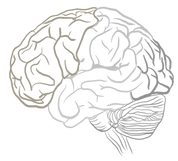
Sensory processing issues can occur when the brain has difficulty accurately interpreting signals coming from the senses.
Even when the eyes, ears, or other sensory organs are working normally, the brain may process that information inefficiently. This can lead to reduced awareness of sensory input, slower interpretation, or difficulty integrating what the body is sensing.
These challenges are not always caused by problems with the senses themselves — they often reflect how the brain receives, organizes, and responds to incoming information.
This can look like:
• Reduced sensitivity to sound, touch, smell, or taste
• Difficulty noticing sensory input unless it is strong
• Slower processing of visual or auditory information
• Trouble integrating multiple senses at once
• Feeling disconnected from physical or environmental cues
Learn how brain training supports sensory processing and integration.


WHAT NEUROFEEDBACK CHANGES
Neurofeedback doesn’t directly stimulate the senses. Instead, it helps the brain improve the way it processes and integrates incoming information.
As brain communication and timing become more efficient, many people notice changes such as:
-
Improved awareness of sensory input
-
Faster processing of visual and auditory information
-
Better coordination between sensory systems
-
Improved attention to environmental cues
-
Greater overall brain regulation and clarity
-
More stable energy and cognitive performance
Because neurofeedback works with underlying brain activity — not just symptoms — improvements often extend to focus, coordination, emotional regulation, and cognitive processing.
BRAIN MAP
HEALING STARTS WITH A CLEAR PICTURE OF YOUR BRAIN
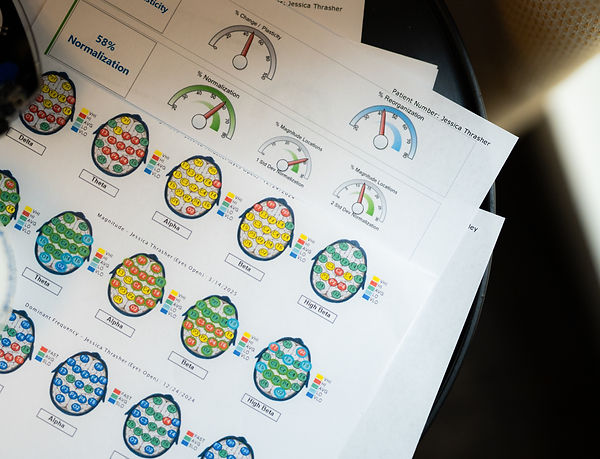
Your full EEG brain scan and qEEG brain map show how different regions of your brain are communicating, where patterns may be overworking or under-supported, and how your nervous system is responding to stress, focus, sleep, and emotion. The scan gives us a clear picture of how your brain’s firing and wiring are functioning and why certain challenges may be showing up.
This information allows us to personalize your neurofeedback training so it’s based on your brain and its root patterns, not guesswork, symptoms, or one-size-fits-all approaches. The process is comfortable, non-invasive, and empowers you with answers.
A DIFFERENT APPROACH
ADVANCED NEUROFEEDBACK ROOTED IN APPLIED FUNCTIONAL NEUROSCIENCE
Neurofeedback is a form of brain training that works directly with how the brain and nervous system function. Using real-time feedback from your brain’s activity, the brain learns to recognize inefficient patterns and gradually adjust itself toward greater regulation, clarity, and balance.
Rather than relying on insight, effort, or symptom management, neurofeedback provides the brain with accurate information about its own brainwave timing, firing, and communication. Over time, this supports more efficient brainwave patterns and nervous system responses -- impacting mood, focus, sleep, stress tolerance, overall resilience, and more.
At Thrive Neurofeedback Center, training is guided by full EEG and qEEG brain mapping and designed from your individual brain data, not preset programs or consumer devices. Protocols are refined as your brain responds, with education and progress tracking built into the process so change is both measurable and engaging.
For many people, neurofeedback becomes the most direct and effective path forward after other approaches haven’t fully addressed the root of what’s happening.
With over 11 years of experience and thousands of brain maps reviewed, Thrive brings a depth of precision and education that goes beyond common therapies, wearable devices, or automated programs.
Clients choose Thrive because they want:
-
Real EEG-based neurofeedback
-
Personalized protocols (not pre-set programs)
-
Ongoing education and progress tracking
-
A practitioner who understands brain-based change
WHO IS NEUROFEEDBACK FOR?
REDUCED SENSORY AWARENESS
Some individuals may not easily notice sensory information such as sounds, touch, smell, or visual details.
Neurofeedback can help strengthen communication between sensory and attention networks so the brain becomes more responsive to incoming signals.
SLOW SENSORY PROCESSING
Visual or auditory information may take longer to interpret or respond to.
Neurofeedback helps improve timing and coordination across brain networks involved in perception and processing speed.
DIFFICULTY INTEGRATING MULTIPLE SENSES
The brain may struggle to combine information from different senses into a clear understanding of the environment.
Neurofeedback helps strengthen communication between sensory regions and higher-level processing networks.
DISCONNECTION FROM PHYSICAL CUES
Some people feel less aware of internal bodily sensations or environmental signals.
Neurofeedback helps support stronger integration between sensory, regulatory, and awareness networks.

INVESTMENT IN CHANGE
After completing your initial brain map and free trial neurofeedback session, ongoing training happens through thoughtfully designed brain training protocols that allow the brain to learn new patterns and rewire neuropathways for lasting change.
Training is offered through flexible session packages including savings for continued training. Sessions can be completed in-office in Boulder or remotely, depending on your needs and location. Packages include ongoing education, progress tracking, follow up brain map scans and support along the way.
Many clients begin neurofeedback while taking medication or using other forms of support. Neurofeedback can be done alongside these approaches. As brain function becomes more efficient and regulated, people notice changes in how much support they need over time. Medication reductions or elimination are likely, and decisions are always made with your prescribing provider.
Neurofeedback is private pay; sorry but we do not take insurance.
Full pricing details are available on the pricing page.
READY TO THRIVE?
Every client begins with a comprehensive New Client Immersion, designed to understand your brain, your nervous system, and what will actually help you
Your first step includes:
• A professional qEEG brain map
• A personalized review of your results
• Neuro-education tailored to your brain
• A complimentary introductory neurofeedback session
(Remote and in-office options available)